Old Dhaka does not perform for the camera. It has been going about its business for roughly four hundred years, since the Mughals first built their capital along the Buriganga, and it will keep going regardless of who happens to be standing there with a lens. That is exactly what makes it one of the richest places in South Asia to photograph - nothing is staged, and almost nothing waits for you to be ready.
Start at the riverfront, before the heat arrives
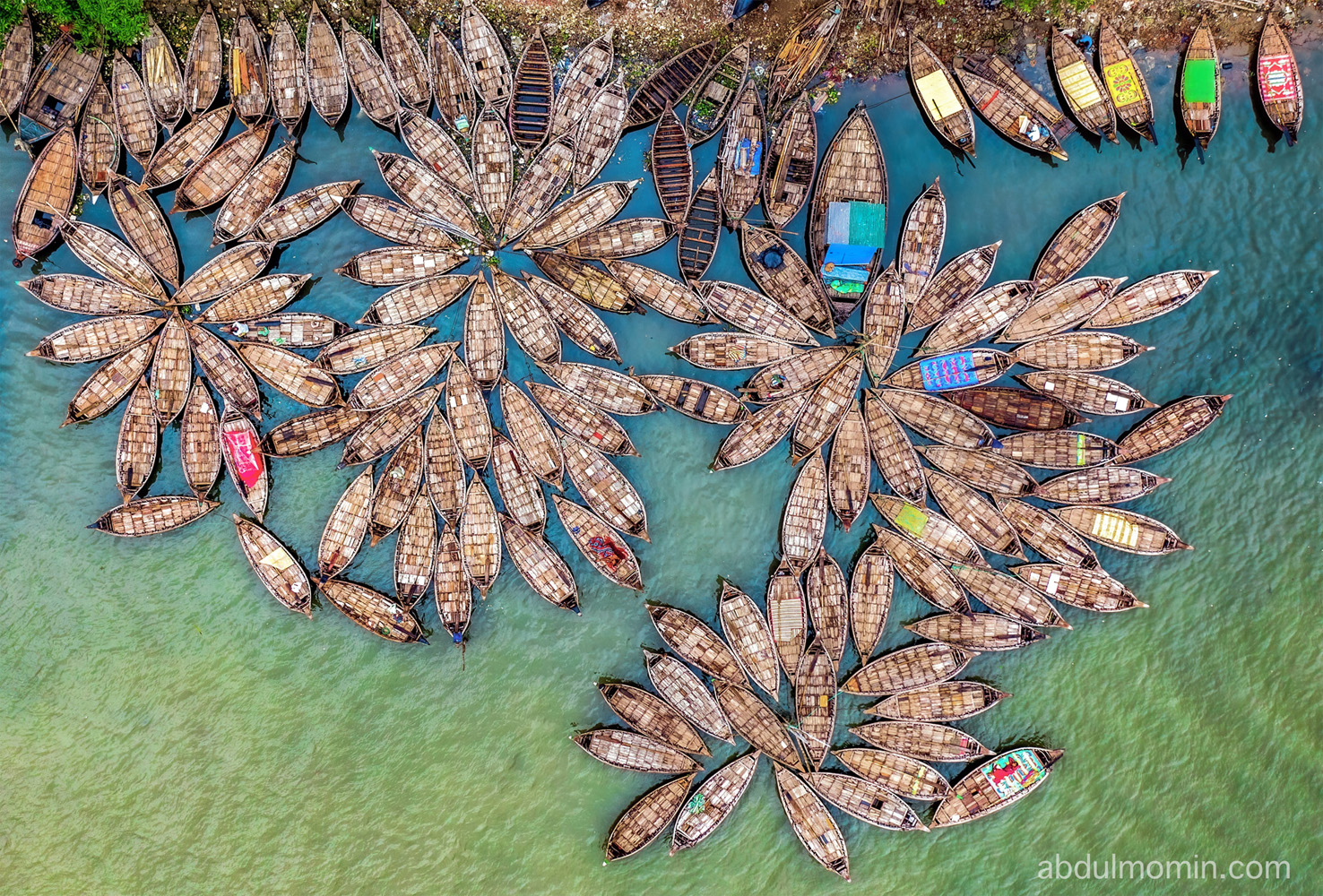
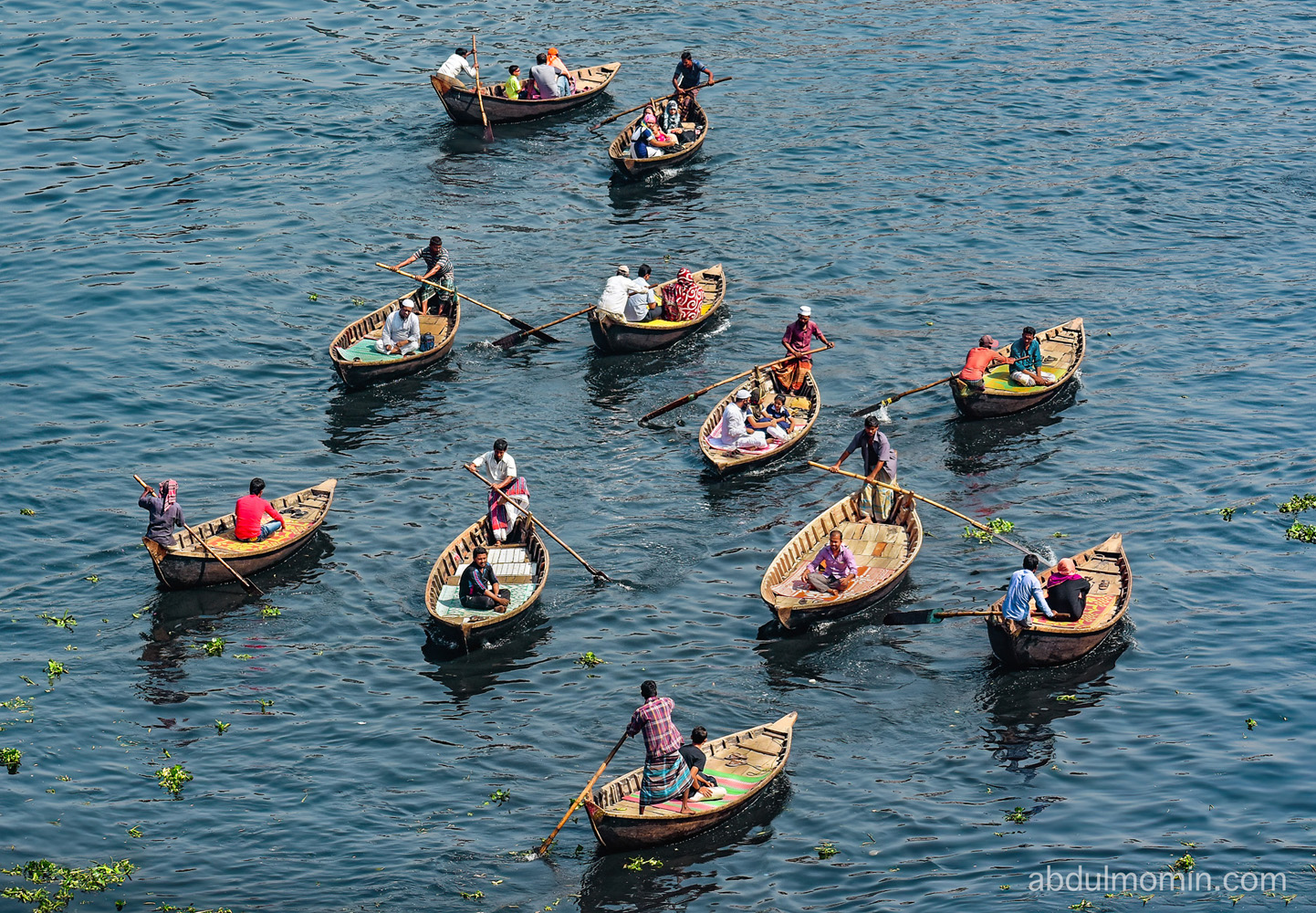
Sadarghat is the busiest river terminal in the country, and it comes fully alive well before most tourists are awake. By 6:30am, wooden launches and country boats are already moored in dense, overlapping clusters, sterns knocking gently against each other. Climb to a rooftop tea stall nearby and the whole scene resolves into pattern - hulls, ropes, reflections, repeated a hundred times over.
Ground level gives you something completely different. Porters carry impossible loads down narrow gangplanks. Boatmen argue over passengers. Tea sellers move through the crowd with kettles balanced on trays. This is not a photo opportunity so much as a way of life that has continued, essentially unchanged, for generations.
The lanes behind the main roads
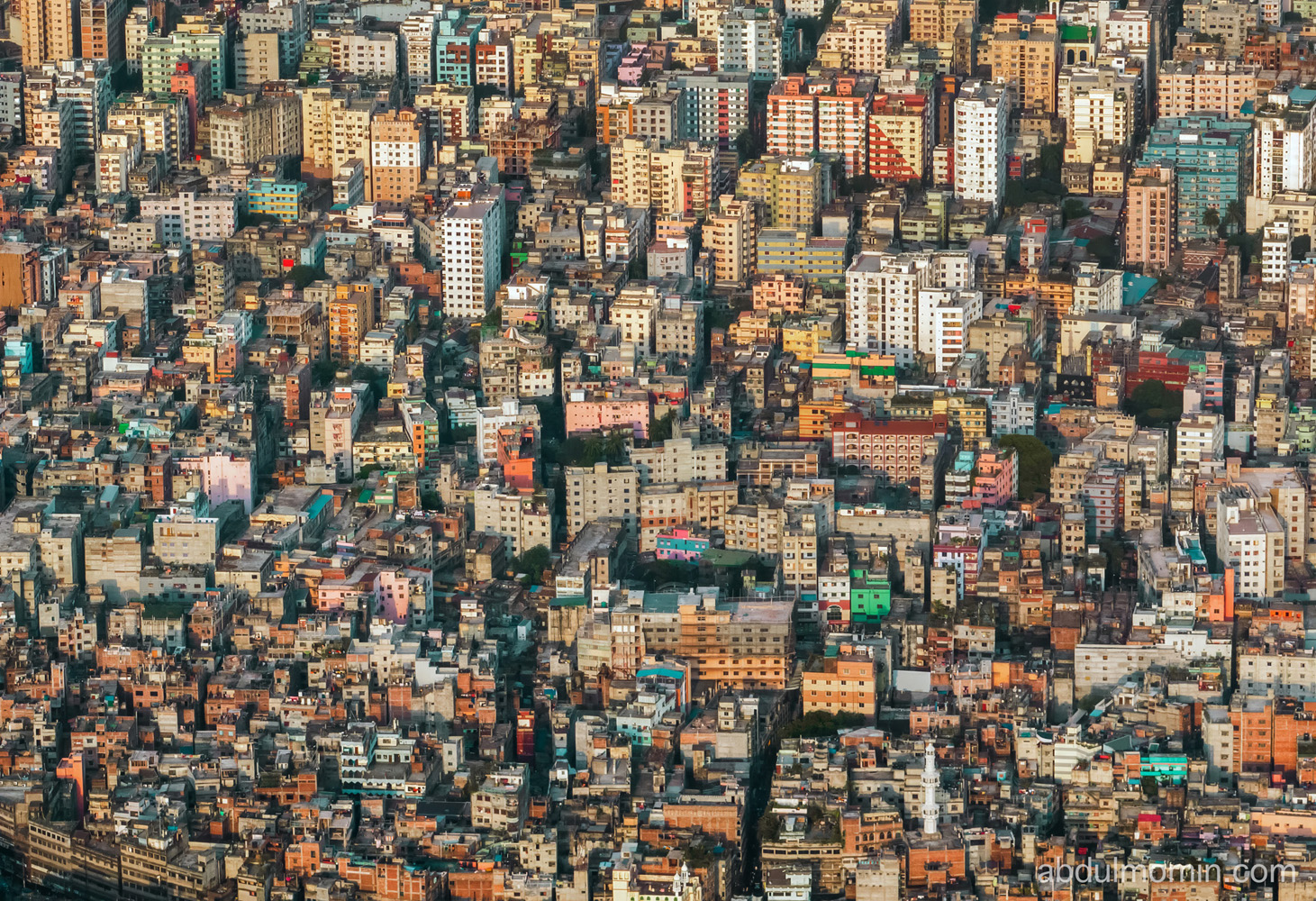
Turn off any of Old Dhaka's main thoroughfares and you enter a different city entirely - one of shaded, three-foot-wide lanes where the architecture leans in from both sides and blocks out most of the sky. Spice merchants weigh cardamom and dried chili by hand, the scales swinging on frayed rope. A few doors down, a rickshaw painter finishes an intricate floral design on the back panel of a cart, working from memory rather than any sketch.
Spring hardware shops, brass workshops, and vermicelli driers all operate within a few blocks of each other, tucked between buildings that have not been renovated in decades. None of it is arranged for visitors. That is the appeal.
Practical notes for photographers
- Timing: Arrive at Sadarghat by 6:30am for the best boat activity and softest light. The inner lanes stay interesting all day, but midday sun in the open squares is harsh.
- Gear: A wide lens handles the tight lanes; bring a short telephoto too for compressing the layered boat scenes at the river.
- Patience over motion: The best frames in Old Dhaka tend to come from standing in one spot for twenty minutes, not from constantly moving to the next corner. Let scenes build around you.
- A local guide helps enormously here specifically, since many of the most interesting workshops are inside buildings with no signage, and owners are far more open to a camera when someone they know makes the introduction.
Old Dhaka rewards a full, unhurried day far more than a rushed morning tour. Budget for it accordingly, and expect to come away with more usable frames than almost anywhere else on a Bangladesh itinerary.
See more of Momin's work at abdulmomin.com, or read more travel stories on TraveloJoy.