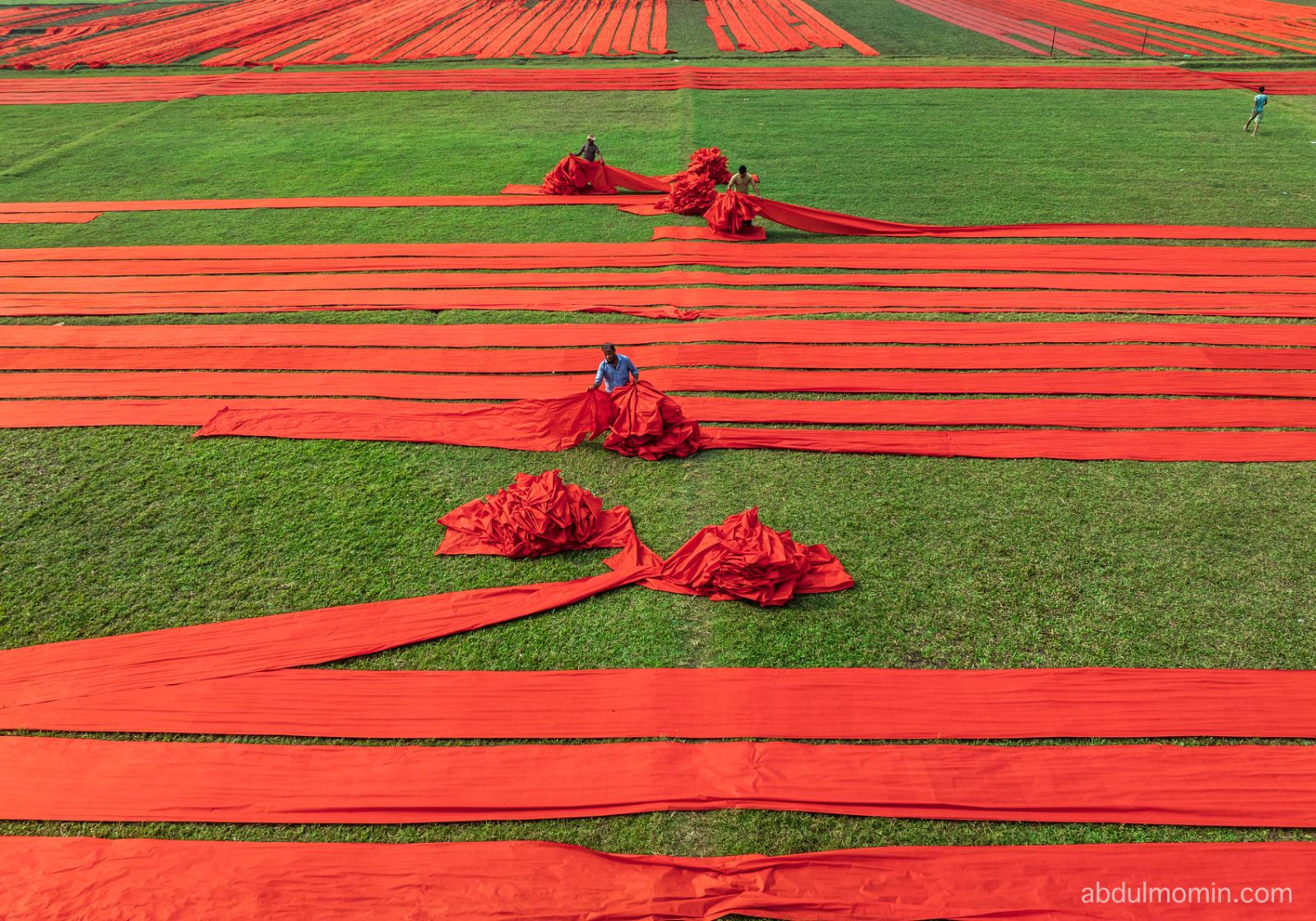
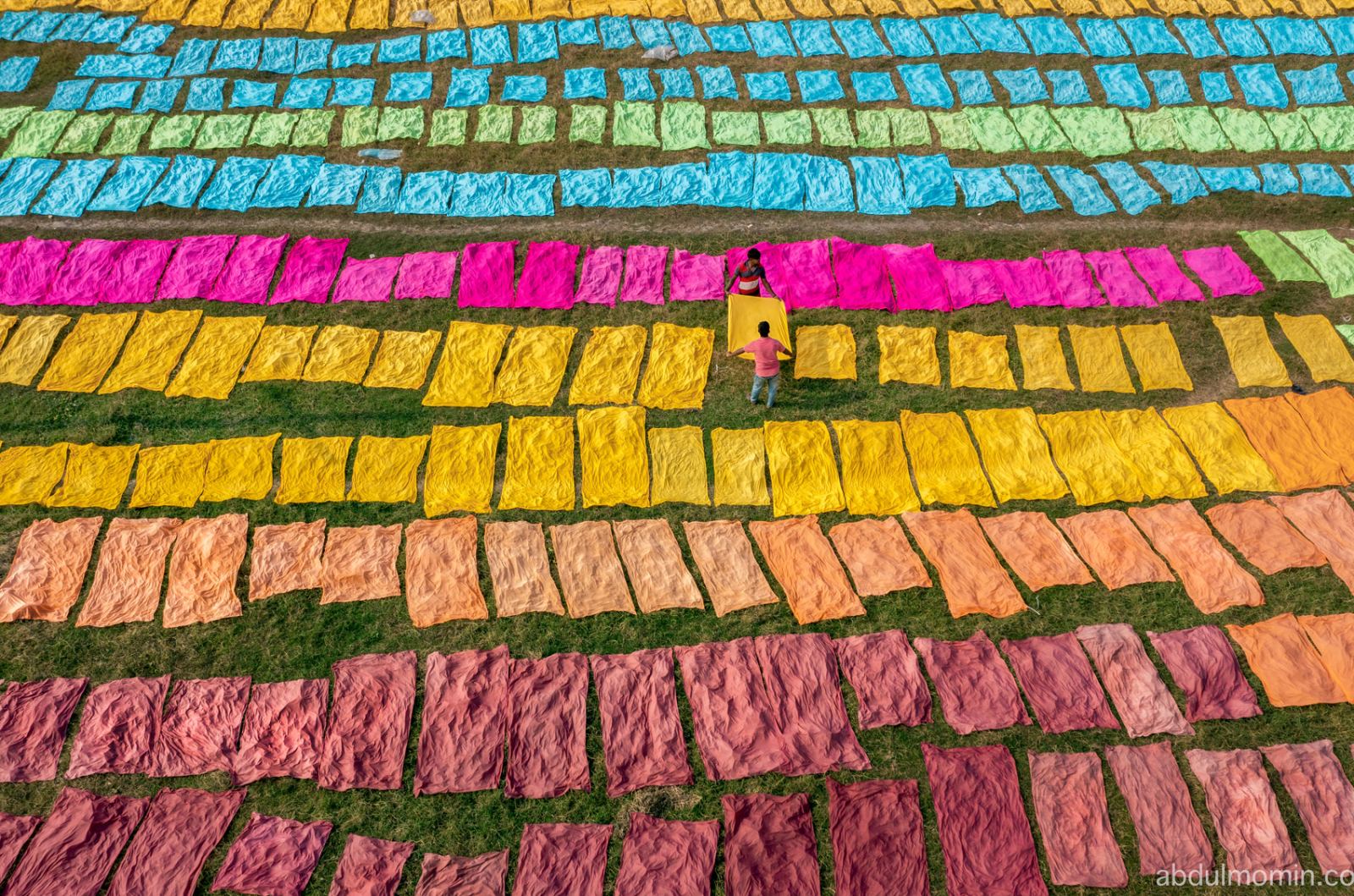
In rural fabric-dyeing villages across Bangladesh, entire fields double as drying yards during the dry season. Long bolts of freshly dyed cloth, much of it a deep, saturated red or crimson known locally as lal salu, are stretched across open grass or hung from bamboo frames to dry in the sun. From above, the fields resolve into solid blocks of color, unlike almost anything else you will find in the country's landscape.
How the process actually works
The cloth arrives from nearby dye houses still damp, and is laid out or hung in long, even rows so it dries evenly and doesn't crease. Workers move constantly through the rows, tossing sections of fabric to redistribute them, checking for dryness, and repositioning bolts as the wind shifts. It is repetitive, physical work, done almost entirely by hand, and it has been done this way for generations in these particular villages.
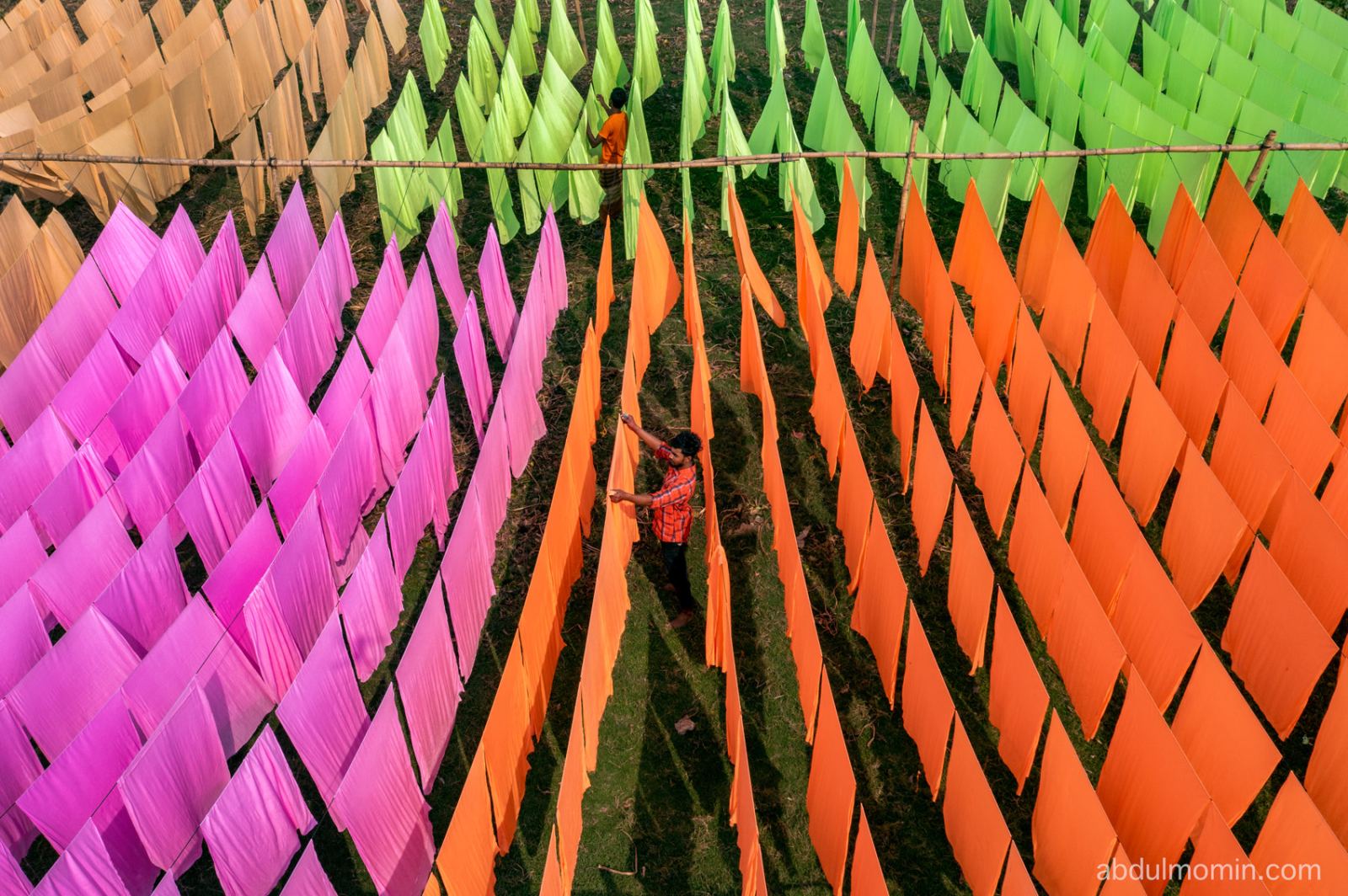
Ground level versus aerial - two completely different photographs
From the ground, you get the human element: workers moving between rows of hanging fabric, the texture of cloth catching wind, the contrast between skin, fabric, and green grass. It reads as documentary work, close and tactile.
From above, the same scene becomes pure abstraction - color and geometry with barely a hint of the labor involved. Featured in our Discover Rural Bangladesh itinerary, this is genuinely one of the more surprising compositions available anywhere in Bangladesh, and a drone completely changes what the location has to offer compared to shooting only from ground level.
Practical notes
These are working villages, not staged attractions, and unlike major markets or river ghats, they see very few outside visitors. A local guide who personally knows the families running these dye operations matters more here than almost anywhere else on a typical itinerary - showing up unannounced with a camera is a very different experience than being introduced by someone the community already trusts.
Mid-morning, once the fabric is fully laid out but before the light turns harsh and flat, is the reliable window for both ground-level and aerial work. Expect a couple of hours on site to get a full range of compositions, since the light and the workers' positions both shift meaningfully over that time.
See more of Momin's work at abdulmomin.com, or read more travel stories on TraveloJoy.